
ProspectHub · In use at Freestart
Know the company before you call.
Our own teams use it at work today.
ProspectHub finds the businesses our sales teams call, researches them, and keeps the work organised by campaign.
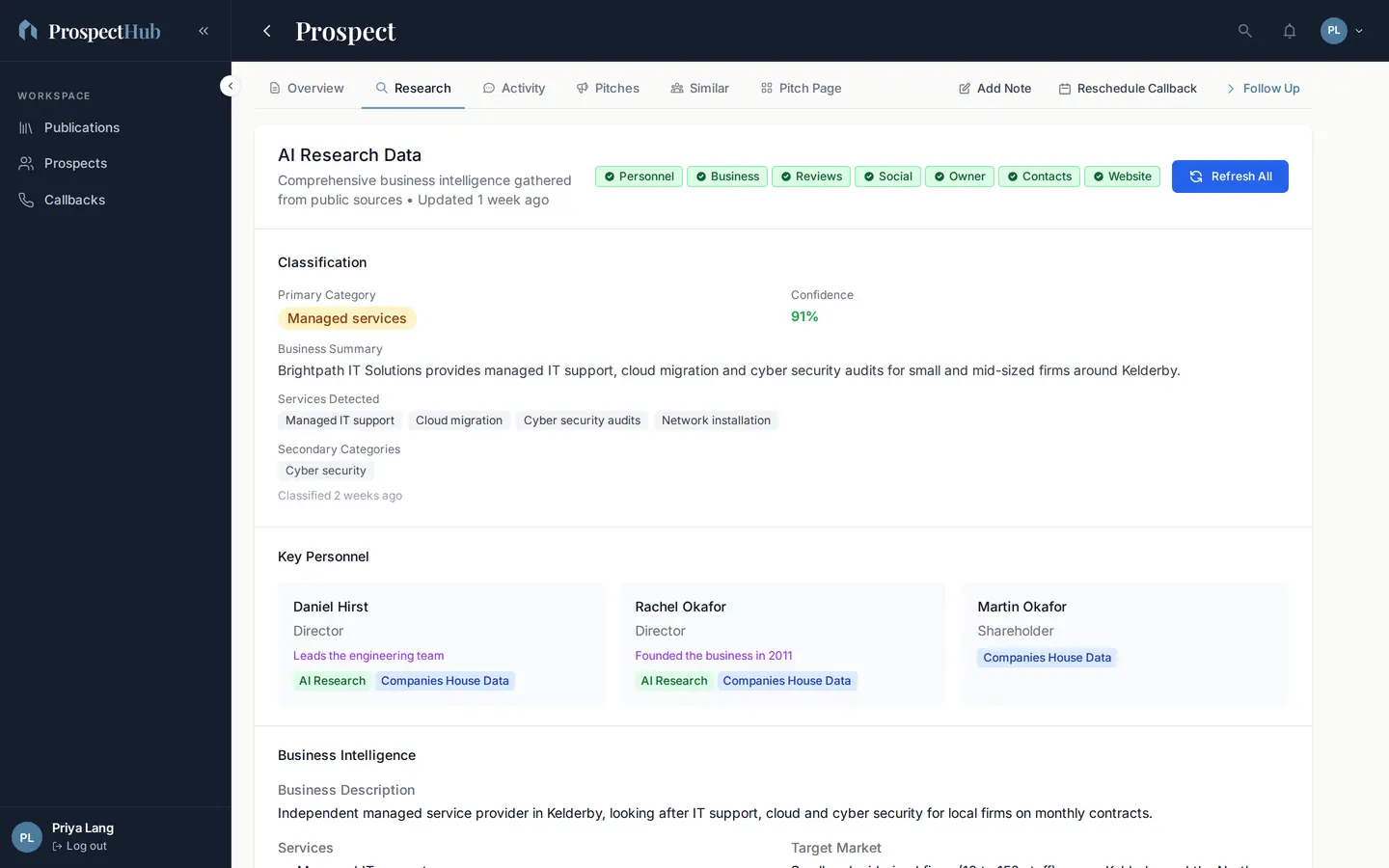
Research gathered from the web, with a link to each source.
Each company classified, with a summary and the services found.
Owners and directors, matched to Companies House.
Business intelligence on every company you call.
ProspectHub builds a sales list from a sector and an area, then uses AI to research each company: what it does, who runs it, what its customers say, and whether it fits the campaign.
Company research
Services, size, target market, certifications and reviews, gathered from the web with a link to each source.
The people who decide
Owners and directors, matched to Companies House and checked against the trading address.
Fit, checked automatically
Every new prospect is classified on import. Companies that don’t fit the campaign are flagged for the team to reassign or exclude.
A pitch for this company
A call script written from the research, built on the team’s own best scripts.
Looks like our customers
Finds the existing customers each prospect most resembles.
Ask about the company
A built-in assistant that knows the prospect’s research and notes, so a rep can ask questions before they dial.
Every fact gathered from the web links to its source.
People decide what happens to a company that doesn’t fit.
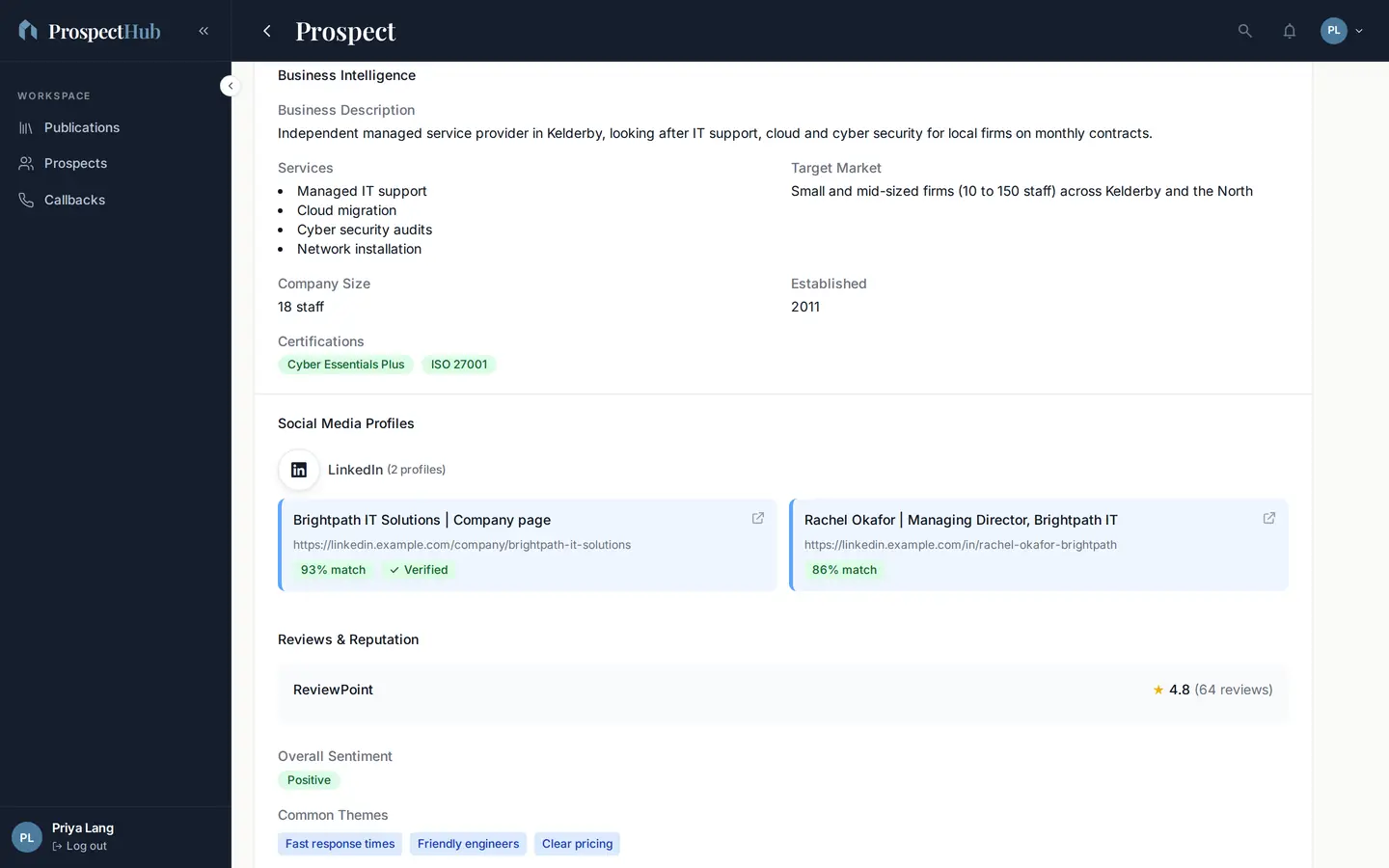
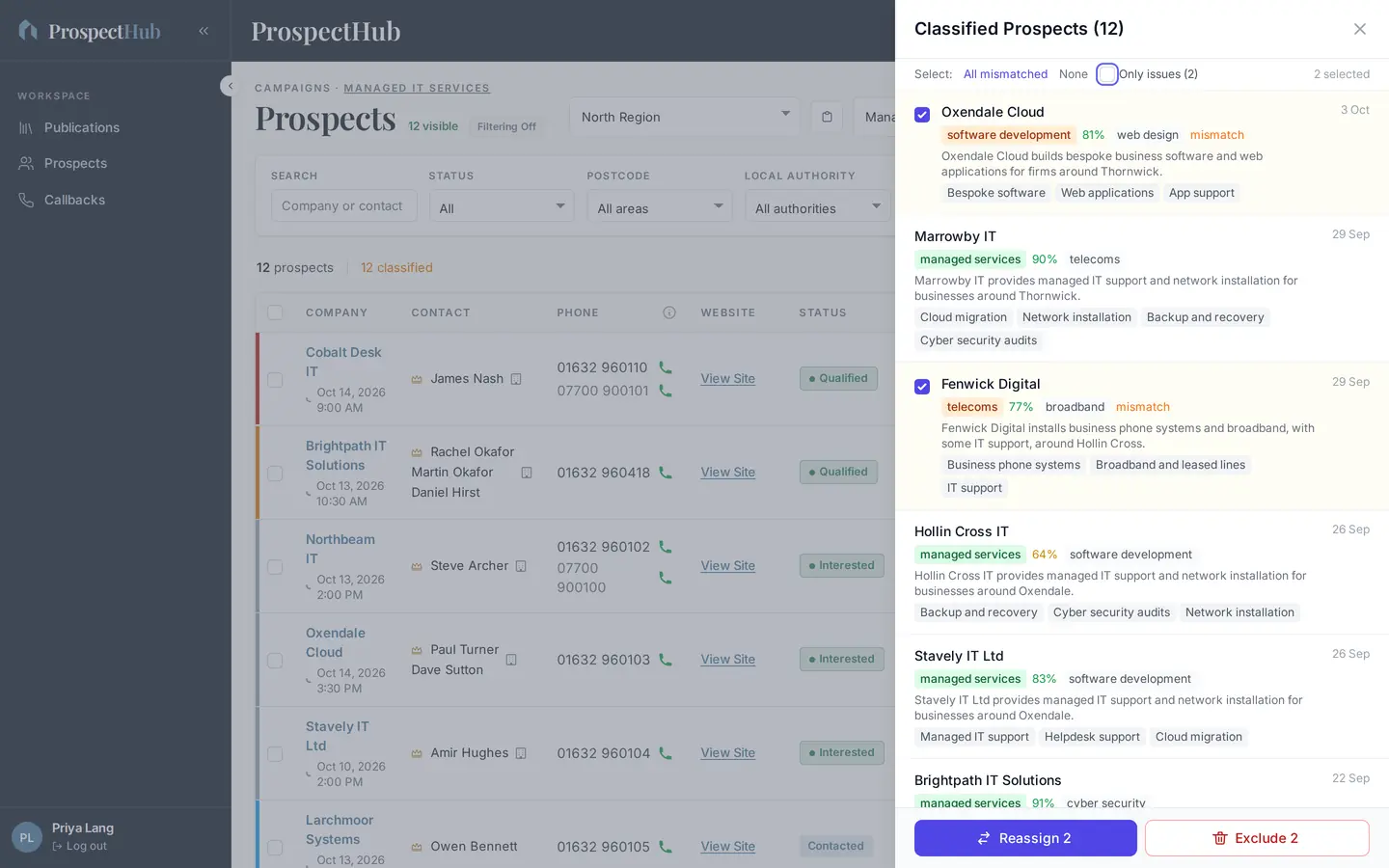
Flagged companies are reassigned or excluded by the team.
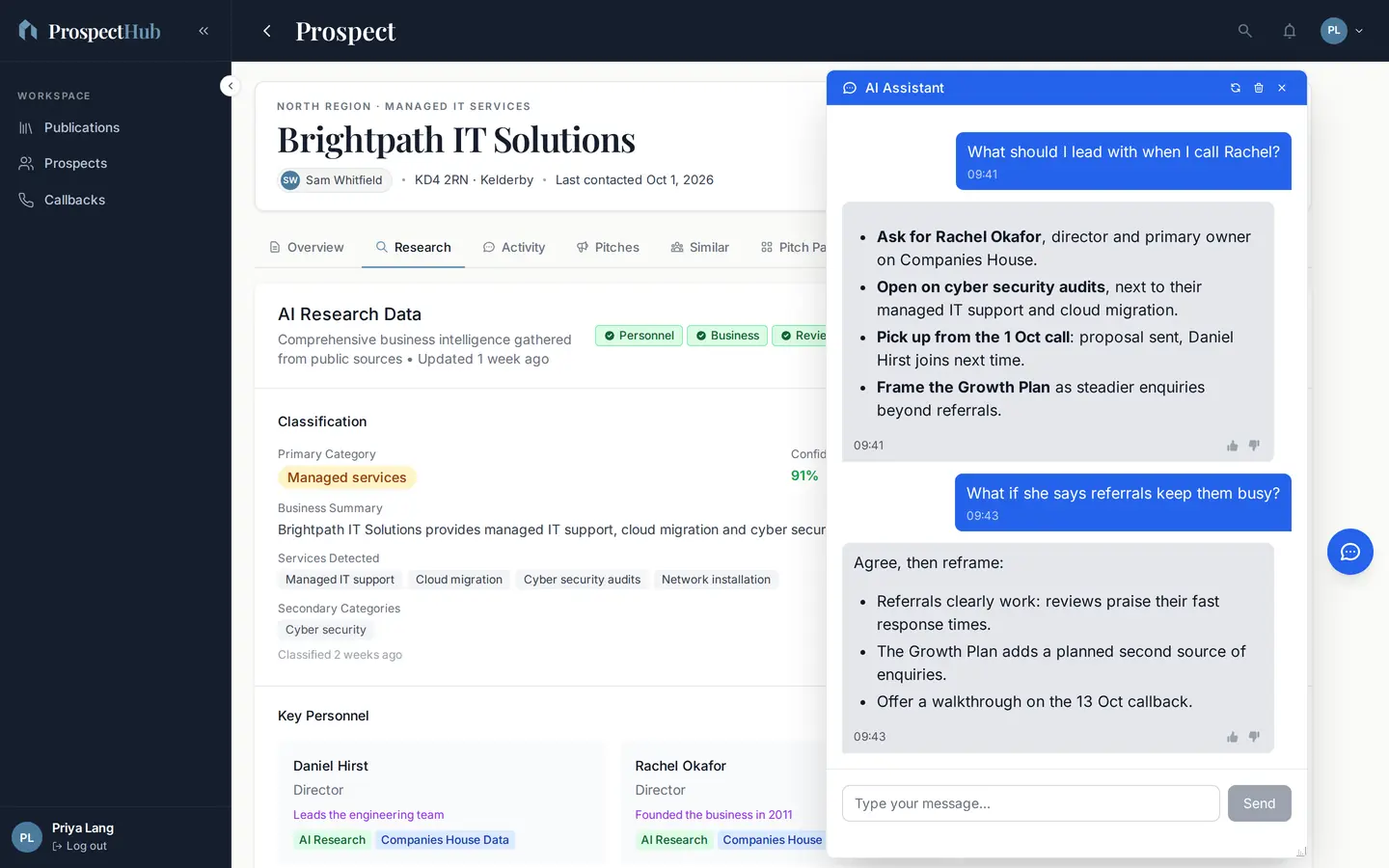
A rep asks before they dial.
Answers drawn from the prospect’s research and notes.
The research the assistant works from.
How we use it
It’s the starting point for our sales teams. Staff still check and add to the research themselves.
ProspectHub is the starting point, not the last word.
- ProspectHubBuild the listFrom a sector and an area.
- ProspectHubResearch each companyWhat it does, who runs it, what its customers say.
- ProspectHubCheck the fitCompanies that don’t fit the campaign are flagged for the team.
- CallHubMake the callWith a pitch written from the research.
Feed the pipeline: stage one of the loop.
In development
Ask for a list in plain words — for example, builders in one town — and get researched prospects back.
In development means it isn’t finished.
Connects to
Where it sits
- 01ProspectHubFeed the pipeline.Researches and qualifies the next accounts, so every call starts with the research in hand.
- 02CallHubScore the calls.Transcribes calls and scores them against the playbook.
- 03TrainingHubTrain the gaps.Turns those scores into coaching for each rep.
Better-coached reps, better prospect notes.
What we learn on calls goes back into who we call.